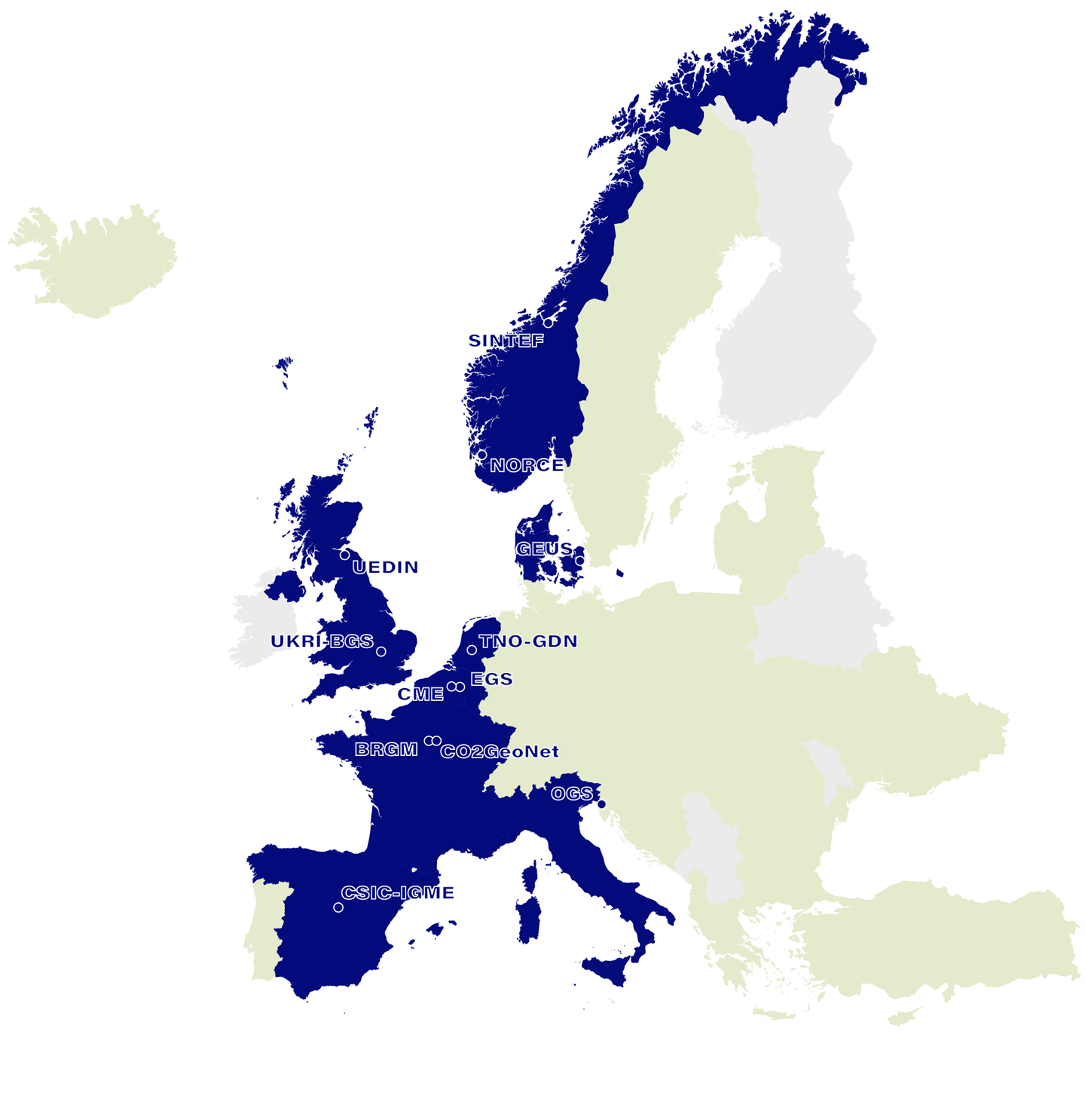
The CO2SITE consortium
CO2SITE brings together organisations with complementary expertise in geological storage appraisal, national data stewardship, European data infrastructure, regulation, techno-economic assessment, risk, capacity estimation, regional planning, stakeholder engagement, communication and project management. TNO coordinates the project. The consortium includes research organisations, geological surveys, universities, networks and specialist organisations that work across the European CO2 storage landscape.
- geological storage appraisal;
- geological information and national data stewardship;
- European geological data infrastructure;
- regulation and policy;
- techno-economic assessment;
- technical and non-technical risk;
- capacity estimation;
- regional planning;
- stakeholder engagement;
- communication, dissemination and exploitation;
- research and project management.
Partners of CO2SITE
| Acronym | Organisation | Country |
|---|---|---|
| TNO | Nederlandse Organisatie voor Toegepast Natuurwetenschappelijk Onderzoek | Netherlands |
| OGS | National Institute of Oceanography and Applied Geophysics | Italy |
| CME | Carbon Management Europe | Belgium |
| CSIC-IGME | Agencia Estatal Consejo Superior de Investigaciones Científicas | Spain |
| CO2GeoNet | European Network of Excellence on the Geological Storage of CO2 | France |
| BRGM | Bureau de Recherches Géologiques et Minières | France |
| EGS | EuroGeoSurveys | Belgium |
| UEDIN | University of Edinburgh | United Kingdom |
| NORCE | Norwegian Research Centre | Norway |
| UKRI-BGS | British Geological Survey | United Kingdom |
| GEUS | Geological Survey of Denmark and Greenland | Denmark |
| SINTEF | SINTEF | Norway |
How the project is governed
General Assembly: The General Assembly is the principal decision-making body of the consortium. It oversees strategic, contractual and consortium-level matters.
Coordinator: The Coordinator represents CO2SITE, supports implementation and compliance, coordinates project reporting and maintains the formal relationship between the consortium and the granting authority.
Project Management Team: The Project Management Team supports project-level coordination. It monitors progress, coordinates activities across work packages and prepares operational decisions.
Work-package leadership: Work-package leaders organise the tasks, meetings, deliverables, milestones and progress reporting within their areas. They also identify dependencies and raise significant risks, delays or decisions to project level when necessary.