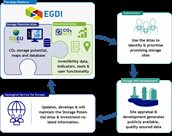
Moving beyond traditional resource mapping
Connected project objectives
Better and more accessible data: CO2SITE will improve the coverage, accessibility and comparability of information about potential geological CO₂ storage sites. Data from different sources will be brought together using shared structures and harmonised approaches.
Fit-for-purpose analytical tools: The project will develop analytical modules that convert available data into information that can support site screening and comparison. These modules will address subjects such as capacity, injection performance, techno-economic considerations and risk.
Regional development: CO2SITE will connect European-scale information with regional contexts. Regional development studies will examine how storage potential relates to industrial demand, transport infrastructure, regulation and stakeholder priorities.
Uptake and impact: Stakeholder engagement, communication, dissemination and exploitation are integrated into the project. This helps ensure that project outputs are understandable, accessible and relevant to their intended users.
Transparent use of information
- static and dynamic storage capacity;
- injectivity and containment;
- pressure behaviour;
- monitorability;
- data availability and maturity;
- infrastructure;
- regulation and permitting;
- development costs;
- technical and non-technical risks.
A connected European pathway
- GSEU develops the shared knowledge foundation. It brings together European geological expertise, harmonises information and improves access to knowledge on sustainable geoenergy, including CO₂ storage.
- EGDI provides the digital infrastructure. It enables geological datasets, metadata, maps and services to be discovered, connected and accessed.
- CO2SITE develops specialised investment-oriented intelligence. It expands the CO₂ storage knowledge base and develops tools that help users screen, compare and understand potential storage opportunities.
- The future Geological Service for Europe provides a possible continuity pathway. Useful data, methods and services may continue to be maintained and developed after the CO2SITE project period.